

How to Prepare for Lambing Season: A Simple Guide for Sheep Farmers
Lambing season is one of the most critical times of the year for sheep farmers. It brings new life to your flock and marks the beginning of another productive season.
But let’s face it: lambing is hard. It’s not as simple as a baby lamb falling out of its mother when it’s time to be born, and momma and baby instantly bonding. In reality, the lamb may be born sickly, the ewe may have complications during birth, and even after a successful birth, the mother may reject her lamb. It’s a time that can be filled with stress and challenges if you’re not adequately prepared. The key to a smooth and successful lambing season is preparation.
At Paragon Livestock Solutions LLC, we’ll use our knowledge and experience to guide you through the essential steps for preparing for lambing season, including the right equipment, best practices, and careful planning. Whether you’re a seasoned farmer or just starting, these tips will help you create a safe, efficient, and stress-free environment for both your ewes and lambs.
Table of Contents

Lambing Season





Farmers During Lambing
Not enough time to read? Here’s a summary:
Preparation is Key: A successful lambing season relies heavily on early and thorough preparation to minimize risks, create a safe environment, and manage stress for both farmers and animals.
Essential Equipment and Setup: Having the right tools and a well-organized lambing environment, including pens, feeders, heat lamps, and record-keeping tools, is crucial for efficiency and safety.
Nutrition and Health Management: Proper feeding for ewes before and after lambing, along with colostrum for lambs, is vital. Vaccinations, parasite control, and readily available veterinary care are also critical for flock well-being.
Best Practices for Newborns: Promptly drying and warming lambs, checking vital signs, allowing bonding time with the ewe, and meticulous record-keeping are essential for lamb survival and future flock planning.
Interested in learning more about preparing for a successful lambing season? Keep reading below!
Why Preparation is Critical for a Successful Lambing Season
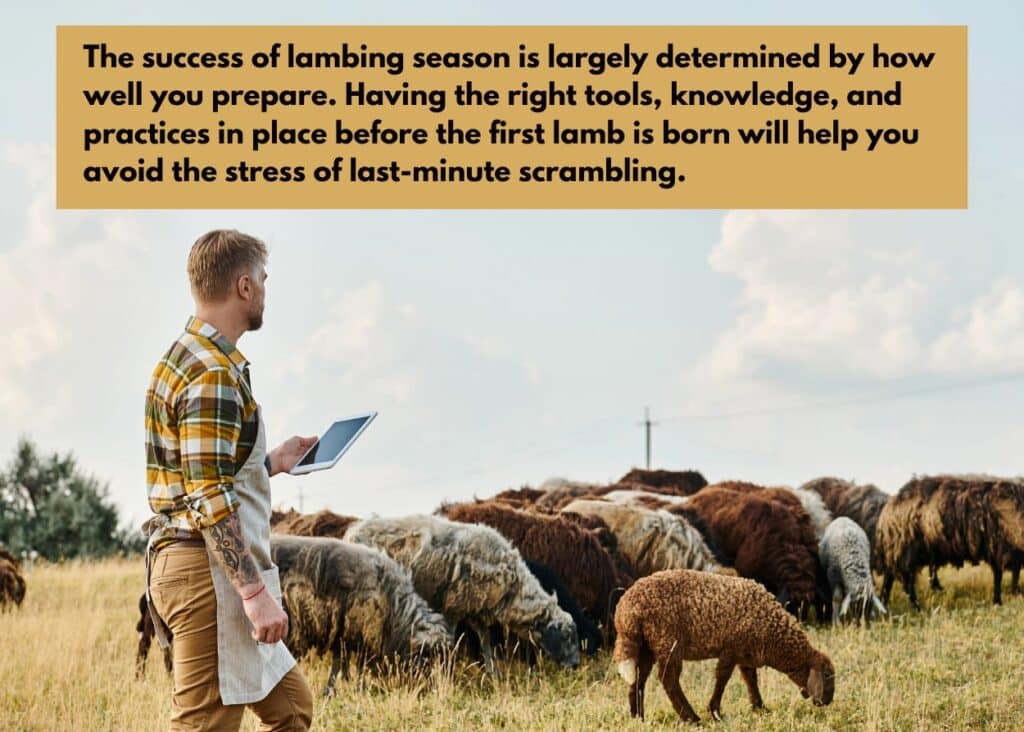
The success of lambing season is largely determined by how well you prepare. Having the right tools, knowledge, and practices in place before the first lamb is born will help you avoid the stress of last-minute scrambling.
Preparation allows you to:
- Minimize Risks: Proper planning helps you avoid complications during birth and reduces the risk of lambs getting rejected or separated from their mothers.
- Create a Safe Environment: Ewes and lambs need a quiet, clean space to thrive. Preparation ensures you have the right facilities to support them.
- Manage Stress: Stress is a significant factor in the success of lambing. When you’re prepared, you’ll feel more confident and in control, which reduces anxiety for both you and your animals.
Starting your preparations early is crucial for a smooth lambing season, encompassing everything that comes before, during, and after birth.
Essential Equipment and Setup for Lambing Pens
Having access to the right equipment is key to ensuring a safe, efficient, and productive lambing season. Before lambing begins, make sure you have all the necessary tools on hand.
Lambing Pens:
A clean, quiet, and secure environment is crucial. Lambing pens provide a space for the ewe to give birth and bond with her lambs. Each pen should be big enough for the ewe to move around comfortably (a 4×6-foot pen is our typical size) but small enough to prevent the lamb from wandering off.
- Cleanliness: Keep pens clean and dry to prevent infection. Use straw or hay as bedding, and have extra material ready for quick changes.
- Ventilation: Ensure pens are well-ventilated but not drafty, reducing the risk of respiratory issues.
- Location: Place pens in a quiet, secluded area away from the main flock. Ewes need privacy during labor, and a peaceful environment reduces stress.
- Monitoring: Position pens where you can easily observe ewes from a distance to step in quickly if complications arise.
- Emergency Preparedness: Have necessary tools and supplies readily available for assisting ewes with labor or lambs with nursing.
Feeders and Waterers:
Both ewes and lambs need access to food and water during lambing. Ensure you have enough feeders and waterers.
- Ewes: Offer high-quality hay and grain supplements.
- Lambs: Ensure lambs can nurse from their mothers, but sometimes, the ewe may not want to nurse or reject the lamb, so you’ll need to bottle-feed if needed.
Heat Lamps:
Newborn lambs are vulnerable to cold temperatures. Heat lamps or other warming equipment are essential to prevent hypothermia.
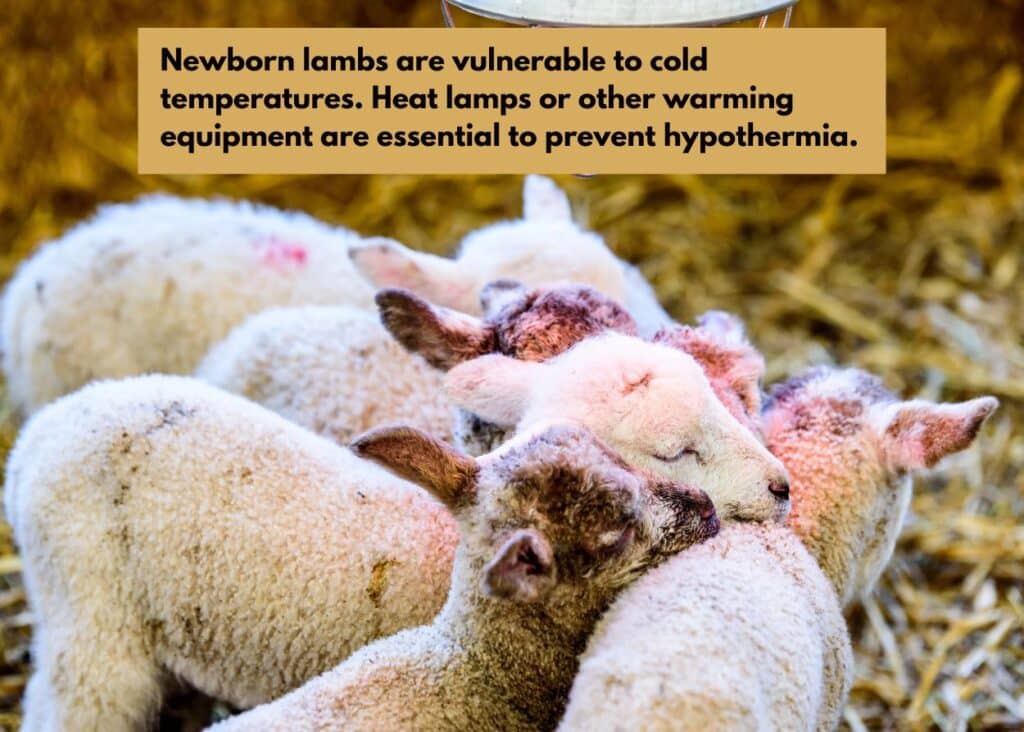
- Positioning: Set up heat lamps to warm lambs without overheating them (90°F to 100°F in the first few hours).
- Monitoring: Keep a thermometer in the pens to monitor temperature.
- Caution: Heat lamps, though vital, are a potential fire hazard. Use heat lamps with caution!
Record-Keeping Tools:
Tracking the health and birth details of each lamb is crucial for monitoring the progress of the flock. Whether paper-based or digital, detailed records help you stay organized and informed, and are helpful for veterinary consultations.
- Birth Details: Record ewe identification, lambing date, number of lambs, and any complications that may have occurred.
- Health Monitoring: Record the health status of each lamb and any special needs it may have.
Unsure of what you need to record? Check out this primer on sheep data collection.
Feeding and Nutrition Before and During Lambing
Proper nutrition is essential for the health of both ewes and lambs, ensuring ewes can deliver healthy lambs and produce sufficient milk.
Pre-Lambing Nutrition:
In the weeks leading up to lambing, ewes need a well-balanced diet of high-quality hay, pasture, and grain to maintain strength and energy.
- Protein and Energy: Ensure adequate protein and energy to support growing lambs.
- Minerals: Provide mineral supplements, especially calcium and magnesium, to prevent deficiencies.
Post-Lambing Nutrition:
After lambing, ewes require additional nutrition to support lactation and recovery. Continue high-quality hay, fresh water, and grain.
- Support Lactation: Provide energy-rich feeds for milk production.
- Electrolytes: Offer electrolytes if the ewe is weak or exhausted. In a pinch, powdered Gatorade or Pedialyte is actually a popular way to provide electrolytes to sheep. However, it’s not a true substitute for specialized livestock electrolyte products, such as Bluelite or Redfish.
Lamb Nutrition:
Newborn lambs need colostrum—the first milk produced by the ewe—within the first few hours. Colostrum provides essential antibodies and nutrients.
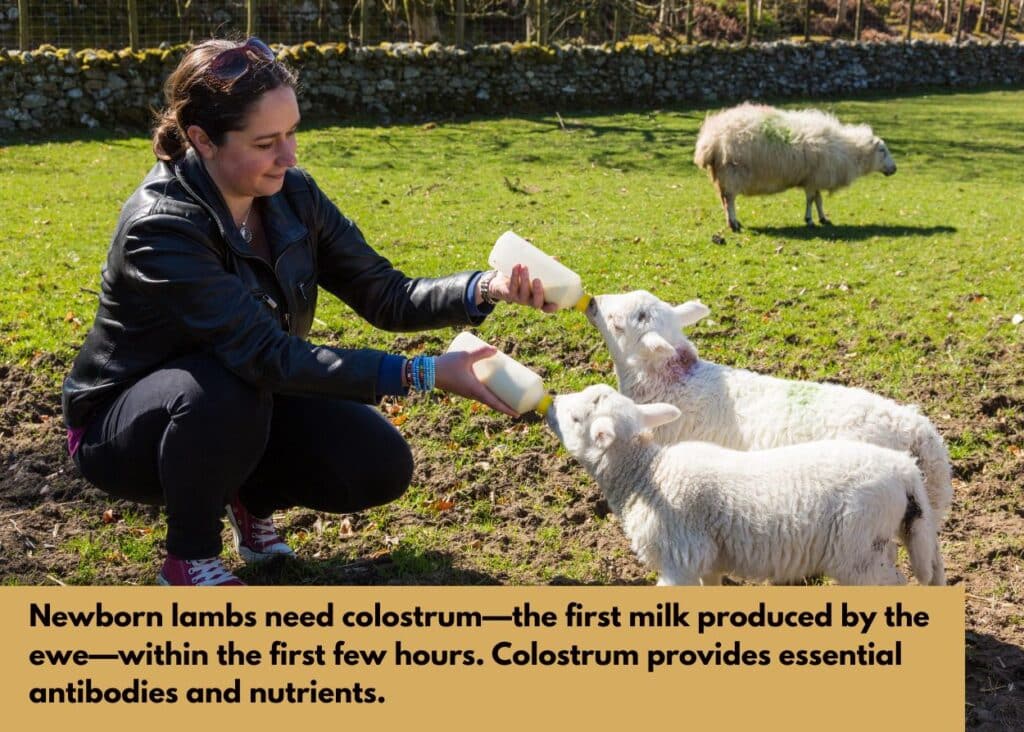
- Nursing: Ensure the lamb nurses within an hour of birth. If the ewe cannot nurse, be prepared to bottle-feed with colostrum or a suitable replacement.
- Additional Care: Monitor lambs for the first few days to ensure proper nursing and growth.
Health and Veterinary Considerations
Health management is critical. Preventative measures reduce risks and ensure flock well-being. With so many animals and health statuses to monitor, meticulous and accurate record-keeping will pay off when your veterinarian visits.
- Vaccinations and Preventative Care: Before lambing, ensure ewes are up-to-date on vaccinations (e.g., tetanus, clostridial diseases, leptospirosis) to protect both ewe and lambs.
- Parasite Control: Deworm ewes before lambing and consider safe treatments for newborn lambs to prevent infestations.
- Veterinary Care: Lambing is a delicate and precarious time for both the ewe and the lamb. Be prepared for emergencies. Keep your vet’s contact information handy for assistance with difficult births or sick lambs.
Best Practices for Handling Newborn Lambs
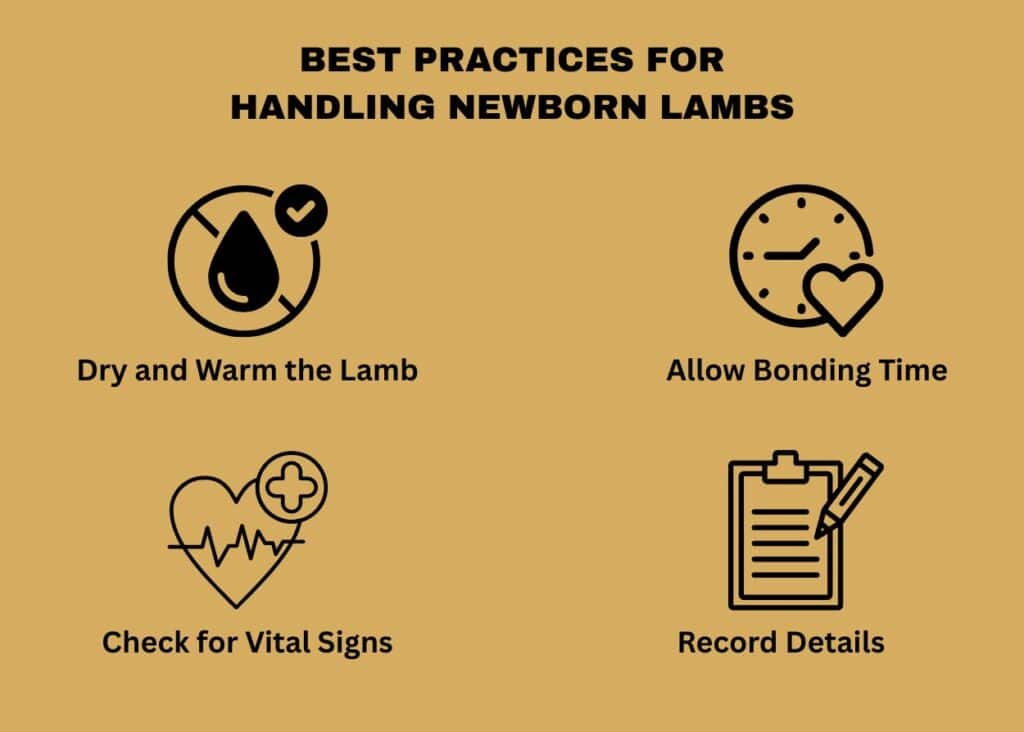
Proper handling is essential to lamb survival. Perform a health check on the lamb as soon as possible.
- Dry and Warm the Lamb: Immediately dry the lamb with a clean towel to maintain body heat. Use a heat lamp if necessary.
- Check for Vital Signs: Ensure the lamb is breathing and moving. Healthy lambs should stand and seek the udder within the first hour. Gently rub a struggling lamb to stimulate breathing. A checkup is crucial to ensure the health of the lamb and to detect problems early so that a veterinarian can address issues early.
- Allow Bonding Time: The bonding of the ewe and her lamb is a beautiful miracle of nature. Within the first few hours of birth, lamb and ewe will recognize each other through scent and vocalization, even in a group of hundreds! To allow this miracle to happen, let the ewe and lamb bond in a quiet, stress-free space to facilitate nursing.
- Record Details: As always, document. After lambs are stable, record their birth weight, gender, and any complications for tracking the health of the flock and future planning purposes.
How Paragon Livestock Solutions Equipment Supports Farmers During Lambing
Lambing season is an exciting time, but it requires careful preparation and attention to detail. By having the right equipment, managing nutrition, and monitoring the health of your flock, you can ensure a smooth and successful lambing season.
At Paragon Livestock Solutions, we understand the challenges of lambing season. That’s why we offer a wide range of high-quality equipment designed to make your lambing season easier and more efficient.
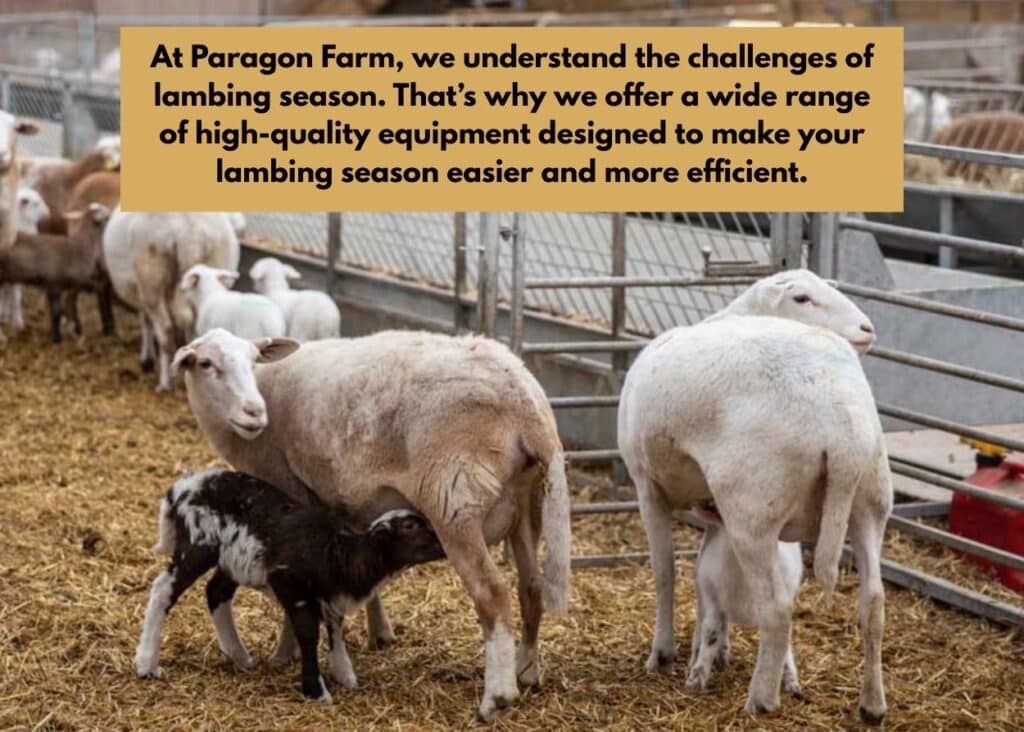
From lambing pens to feeders, nutrition, and feeding solutions, our products help create the optimal environment for both ewes and lambs.
Our equipment is designed with your needs in mind, making lambing season smoother, safer, and more organized. With Paragon Livestock Solutions products, you can focus on the health of your flock, knowing that you have the best equipment to support you.
Contact us today for the best lambing equipment available!