

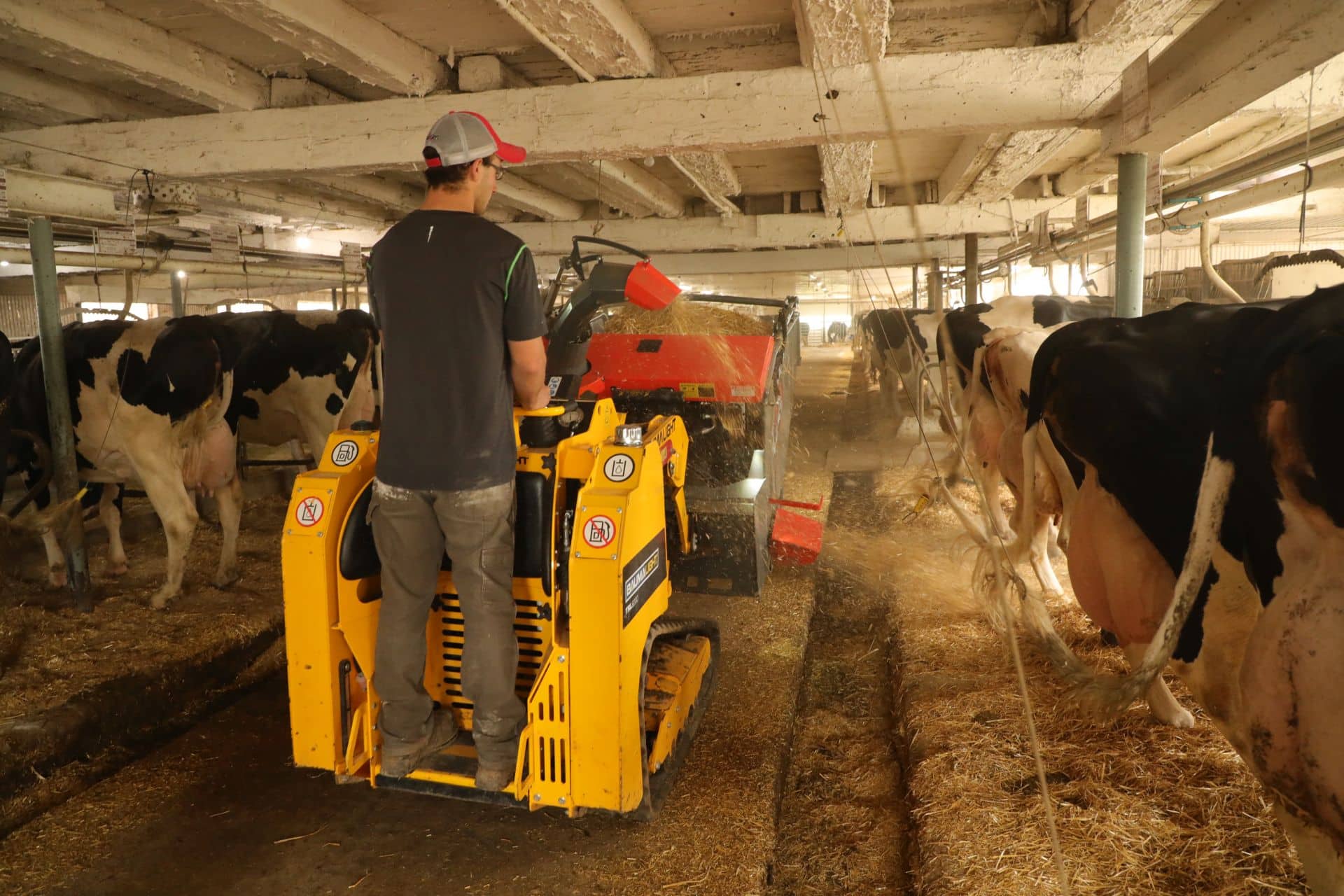
Hand-spreading straw works fine when you’re covering a small area once in a while. A few bales, a pitchfork, an afternoon, done. But as the work grows, whether that’s more acreage, more livestock, or bigger landscaping properties, the same approach starts costing you more than it should. The tricky part is that the shift happens gradually, so it’s easy to keep doing it by hand long after it’s stopped making sense.
Here are five signs it’s time to make the switch to a skid steer straw blower.
1. You’re Losing Hours You Don’t Have
This is usually the first sign, and the easiest to ignore because it happens slowly. A job that used to take an hour now takes half a day. What used to be a quick task squeezed in before other chores now eats into the rest of your schedule.
A skid steer straw blower changes that math directly. Load the bale, aim the hood, and cover the same ground in a fraction of the time, without ever leaving the cab. If you’re tracking hours spent on straw work and it’s climbing every season, that’s your clearest signal.
2. Your Straw Coverage Is Inconsistent
Hand-spreading depends entirely on how tired your arms are by the third bale. Coverage ends up thick in some spots, thin in others, and it’s hard to tell until the straw has already settled or washed out. That inconsistency means wasted material and, on erosion control or seeding jobs, patchy results that don’t hold up.
A straw bale processor with an adjustable hood and a two-stage deflector gives you repeatable, even coverage every time, whether you’re covering ten feet or fifty.
3. Your Crew Is Feeling It Physically
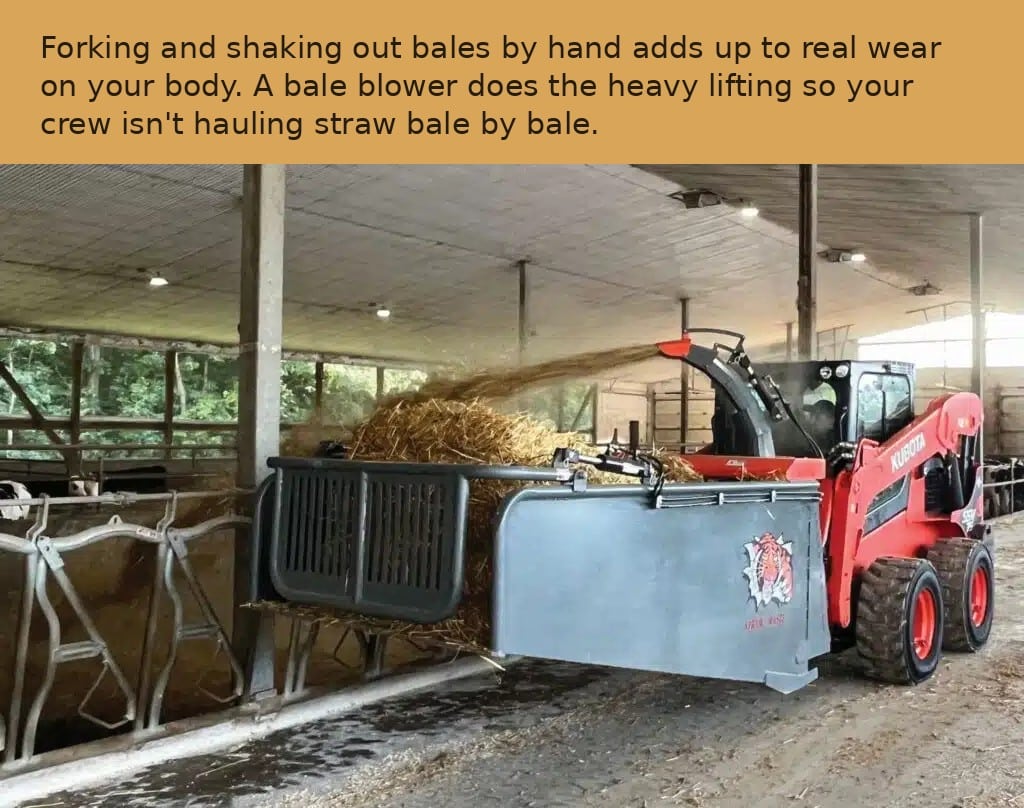
Forking straw and breaking apart bales by hand is repetitive, physical work, and it adds up over a season. Sore backs, slower afternoons, and the occasional strain injury are common complaints once the workload increases. That’s a labor cost that doesn’t show up on an invoice but shows up everywhere else.
A bale blower removes most of the manual handling. Your crew loads the bale and lets the machine do the breaking apart, cutting, and distributing, which means less physical wear on the people doing the work.
4. You’re Turning Down (or Underbidding) Bigger Jobs
There’s a point where a property or a field is simply too big to spread by hand at a price that still makes sense. If you’ve caught yourself passing on jobs, or bidding them low because you know the labor will eat the margin, that’s a direct sign your current method has hit its ceiling.
Equipment that can cover more ground per hour lets you bid bigger properties confidently instead of avoiding them.
5. You’re Racing the Weather
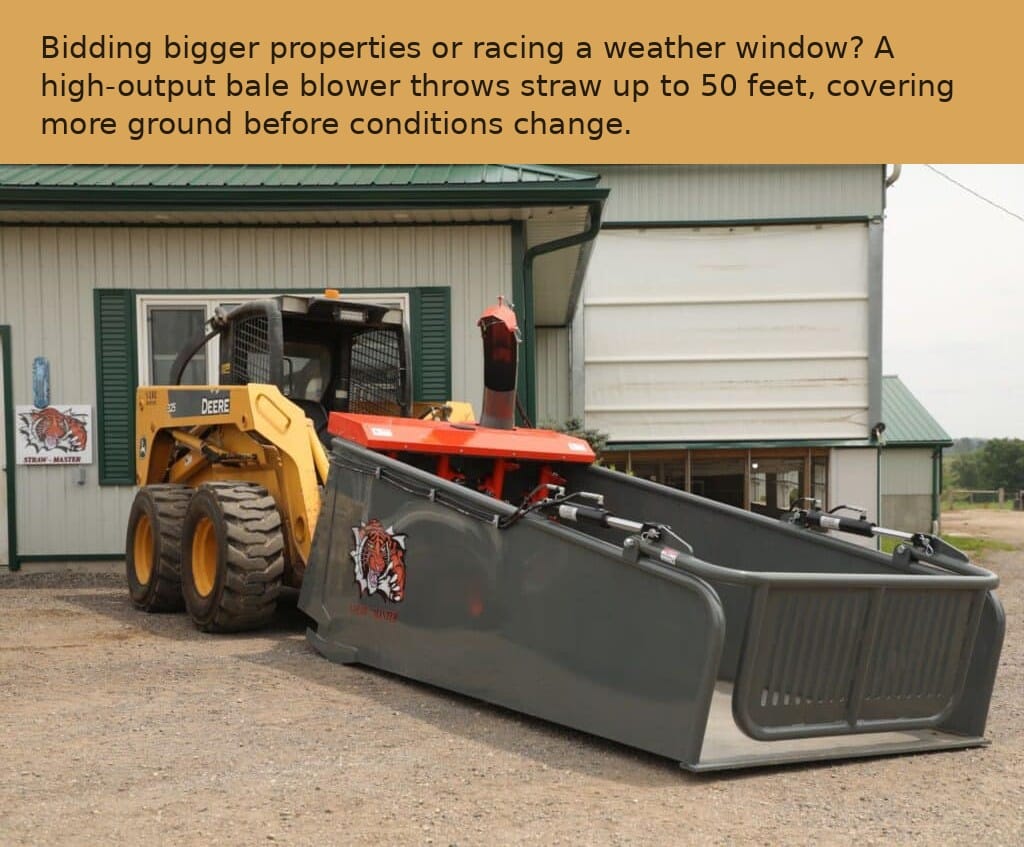
Erosion control and seeding work often comes down to a narrow window before rain, wind, or the next frost. When you’re spreading by hand, that window can close before you finish. Every extra hour spent forking straw is an hour you don’t have if conditions are about to turn.
A straw blower with real throwing distance, up to 50 feet on higher-output models, lets you cover significantly more ground in the same window, which matters most exactly when time is tightest.
Making the Switch To A Skid Steer Straw Blower
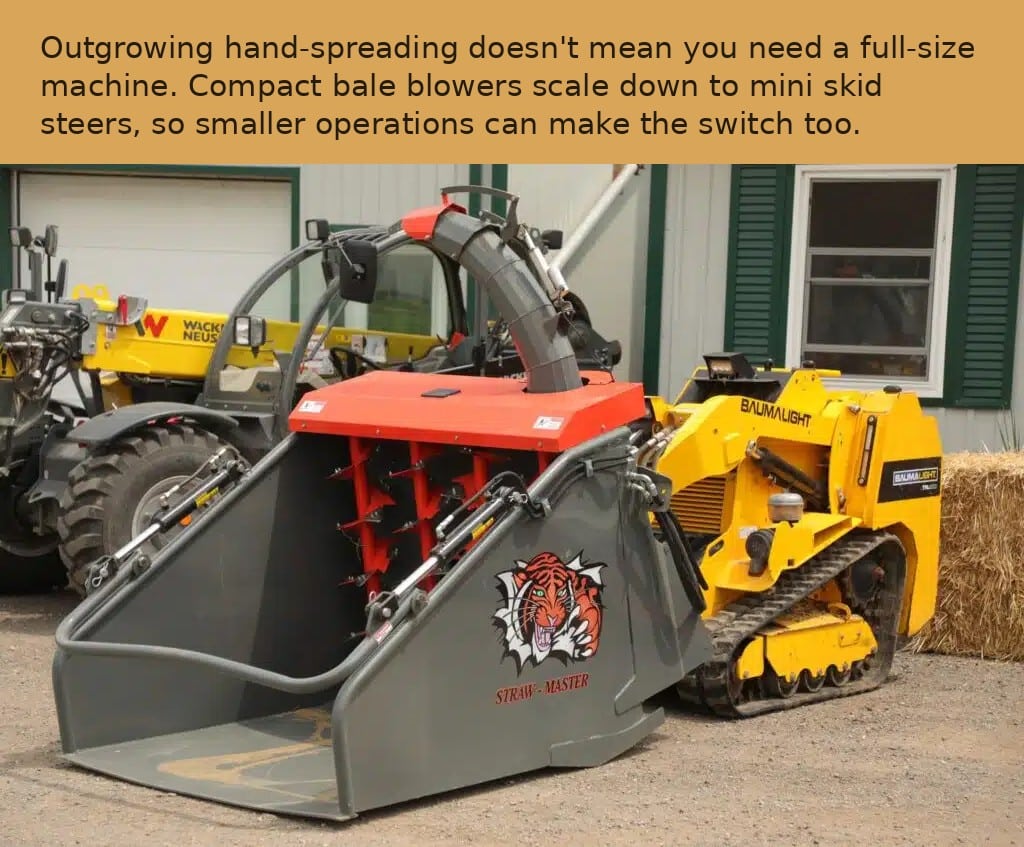
If two or more of these sound familiar, it’s worth looking at what a straw blower would take to run on your equipment. The main things to check are your skid steer’s hydraulic flow (GPM and PSI) against the attachment’s requirements, how far you actually need to throw material for your typical jobs, and whether a compact or full-size unit fits your machine.
Models scale from mini skid steers up through 90 HP machines, so the switch doesn’t require replacing your existing equipment. You can read more on our blog about making sure you choose the right size skid steer bale processor here.
Get the Right Straw Blower For Your Skid Steer & Operation
As a certified StrawMaster dealer, Paragon Livestock Solutions can match a skid steer straw blower to your machine and your workload, whether that’s a compact unit for smaller jobs or a high-output model for acreage and tight weather windows.
Contact us to find the right bale blower for your farm or landscaping business.