
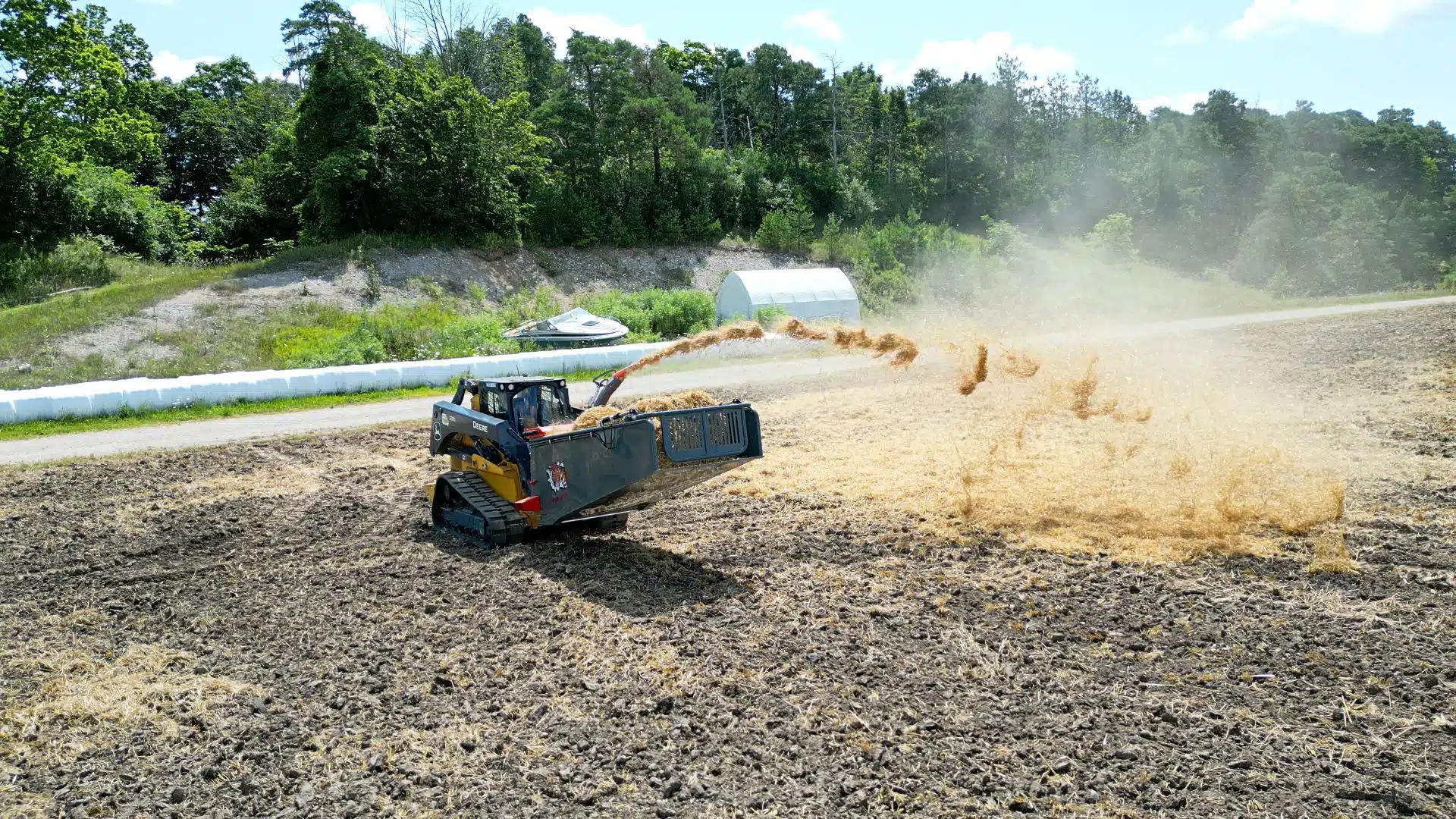
If you’ve started shopping for a skid steer bale processor, you’ve probably noticed the specs pile up fast: horsepower ranges, GPM ratings, bale cavity dimensions, throwing distance. It’s easy to pick a model based on price alone and end up with a unit that’s underpowered for your machine or too small for the bales you actually use.
Whether you’re bedding livestock, feeding hay, or spreading straw for erosion control on a job site, matching the processor to your equipment and your work matters more than any single feature on the spec sheet.
Here’s how to work through that decision.
Start With Your Skid Steer, Not the Attachment
Before you fall in love with a particular model, check what your skid steer can actually deliver. Every straw blower has a hydraulic requirement listed in GPM (gallons per minute) at a given PSI, along with a case drain requirement. If your machine’s auxiliary hydraulics don’t meet that range, the processor won’t spin up to full output, no matter how well built it is.
This is also where horsepower comes in. Compact units are built for mini skid steers in the 18-50 HP range, while heavier-duty models are designed for larger machines and front-end loaders up to 90 HP. Buying a processor rated above what your machine can drive is a common and expensive mistake.
Bale Size and Cavity Dimensions Matter More Than You Think
Every model lists two related but different specs: bale cavity dimensions (how much room is physically inside the machine) and bale size suitability (the largest bale it’s designed to process efficiently). If you’re regularly running large square bales and buy a unit sized for smaller round bales, you’ll either force-fit the bale or leave capacity on the table every time you load it.
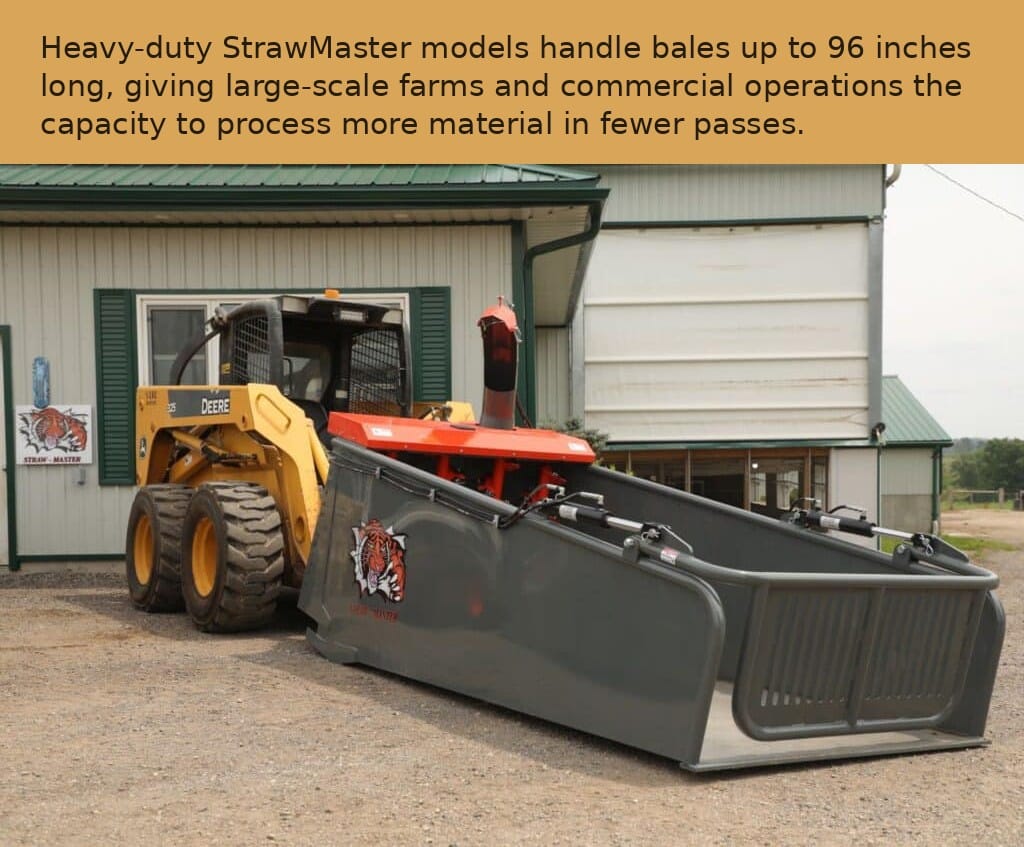
Weight matters here too. Larger units run 1,450 to 1,800 lbs empty, so confirm your skid steer’s rated operating capacity can lift and carry the processor plus a full bale without straining the machine.
Comparing the Bale Processing Lineup
Here’s a quick side-by-side of how the sizing scales across StrawMaster’s most popular models:
| Model | Machine HP | Hydraulic Flow | Bale Size Suitability | Throwing Distance |
|---|---|---|---|---|
| SMMI-4 | 18-50 HP | 8-12 GPM | 48″L x 36″W x 36″H | 25-35 ft |
| SMSD-6 / 6M | 45-65 HP | 20-28 GPM | 72″L x 48″W x 36″H | 30-40 ft |
| SMSD-8 / 8HD | 70-90 HP | 22-30 GPM | 96″L x 48″W x 36″H | 40 ft |
| SMSD 8XL Commercial | 70-90 HP | 36-42 GPM | 96″L x 48″W x 36″H | 50 ft |
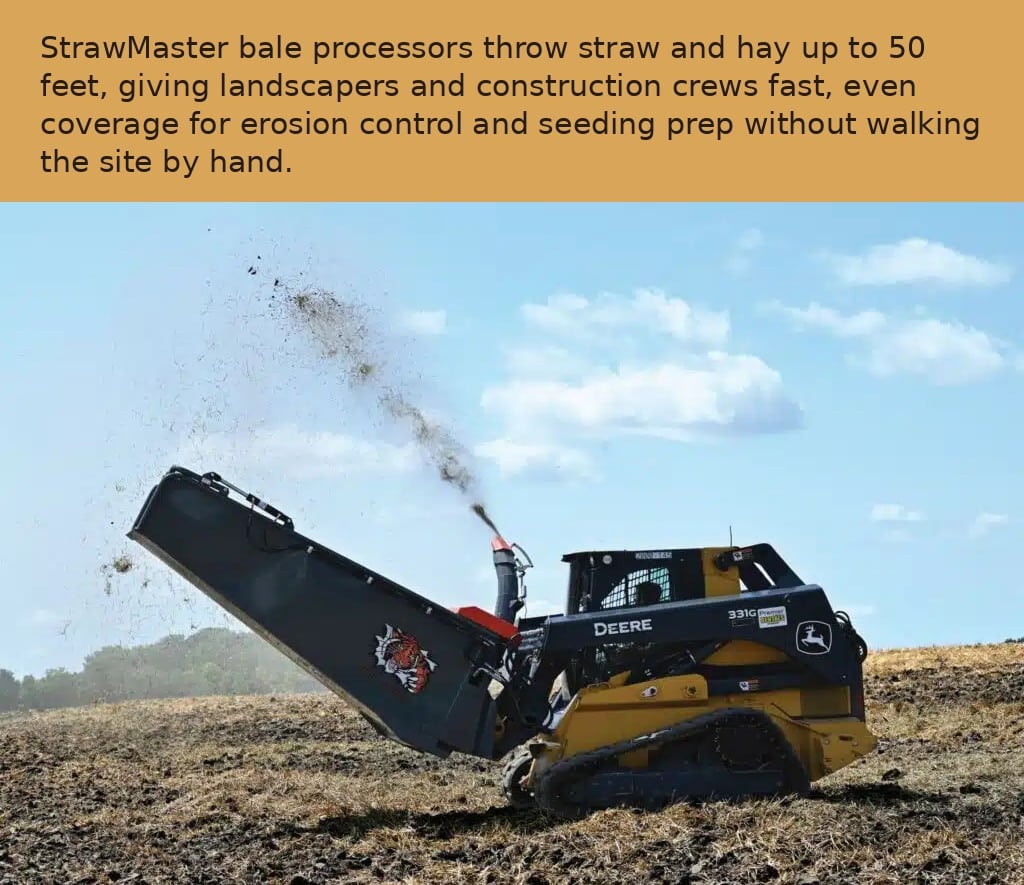
Notice the jump isn’t just about size. Higher-flow models throw material further and process faster, which matters if you’re covering acreage or working against daylight on a job site.
Matching the Bale Spreader to Your Business, Not Just Your Farm
A livestock operation and a landscaping crew are both shopping the same product line, but for different reasons, and that should shape which model makes sense.
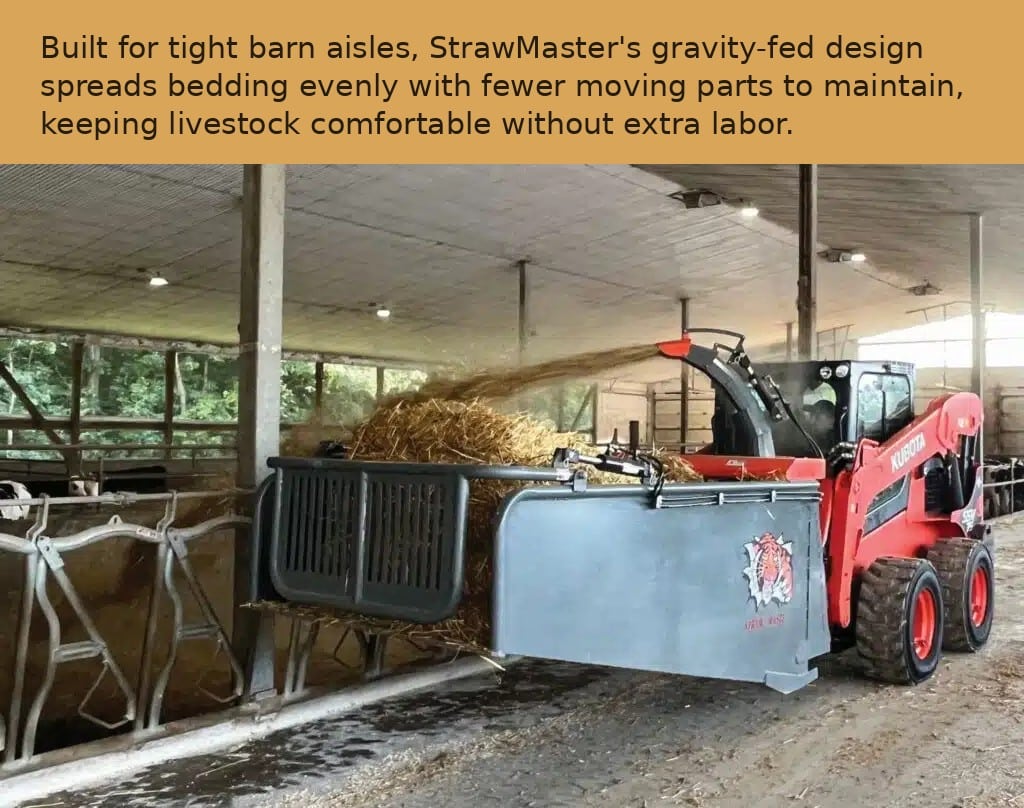
On a farm, the priority is usually bedding and feed prep: consistent cut length, absorbency, and the ability to process a bale without leaving the cab. A mid-size unit that fits your barn aisles and matches your existing skid steer is usually the sweet spot.
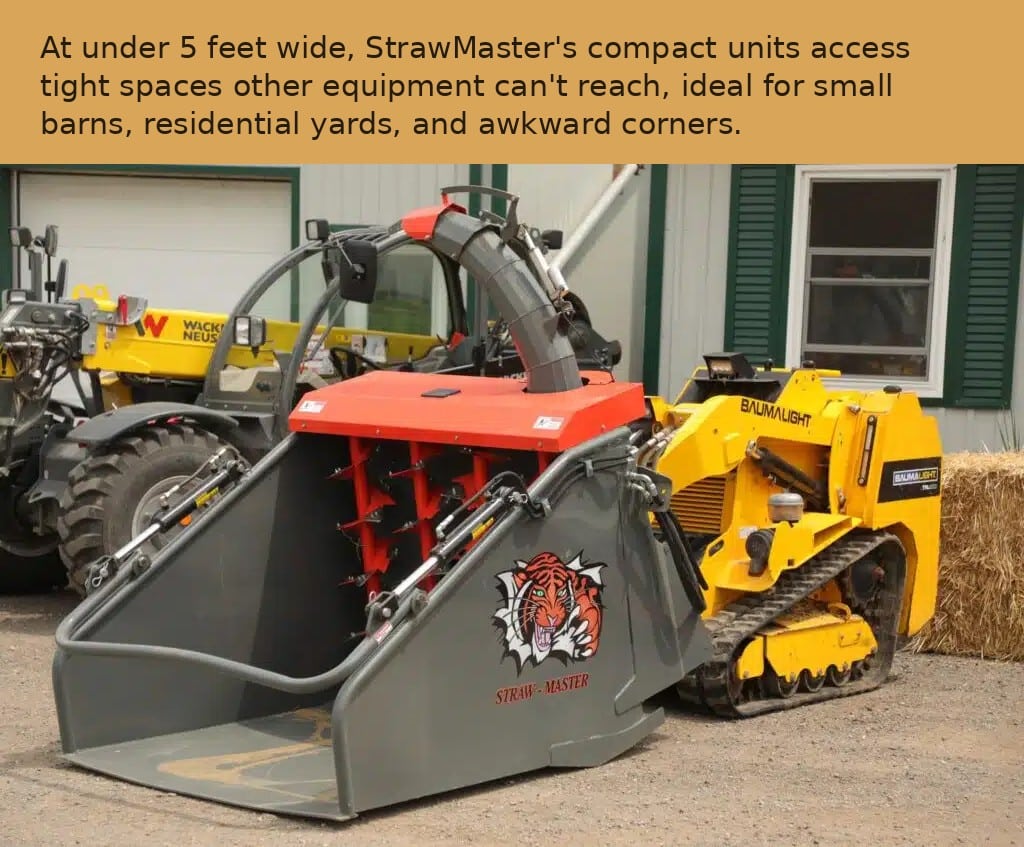
For a landscaping or construction-adjacent business, the priority often shifts toward coverage and access. Compact units under 5 feet wide can maneuver into tight residential yards, while higher-flow commercial models make sense if you’re covering large sites for erosion control or seeding prep and need the extra throwing distance to work efficiently.
Features Worth Paying Attention To
Beyond sizing, a few features separate a good processor from a frustrating one.
- Reversible beaters make unplugging the blower easy when hay or straw gets stuck in it.
- Double-sided blades allow you to flip them when one side gets dull, reducing the number of times you need to sharpen them.
- A 300° hood rotation lets you redirect material without repositioning the machine, which matters in tight barn aisles or narrow job sites.
- A wireless remote means one less wiring harness to route and maintain.
A Quick Checklist Before You Buy Your Bale Processor
Before you commit to a model, confirm you know:
- Your skid steer’s actual GPM and PSI output, not just its horsepower rating
- The largest bale size you regularly run, round or square
- Your primary use case: bedding, feeding, erosion control, or a mix
- Whether your machine has standard or high-flow hydraulics
Get the Right Straw Bale Processing Recommendation with Paragon Livestock Solutions, Not Just a Guess
Sizing a bale processor correctly the first time saves you from a costly mismatch down the road. As a certified StrawMaster dealer, Paragon Livestock Solutions can walk through your machine specs and application with you and point you to the right model, whether that’s a compact unit for tight residential work or a commercial model built for high-volume operations.
Contact us to get matched with the right skid steer bale processor for your farm or landscaping business.
Also, you can view our other sheep & goat equipment products we produce to help you love farming again!